The Shimano Archive
|
Eido Roku™ - 栄道錄 | |||
| http://www.shimanoarchive.com | The sayings and doings of Eido Shimano – 島野栄道の言葉と行動 | |||
|
|
||||
This is a collection of the most recent archive additions, modifications, and amendments for existing documents, in the shimanoarchive. This is only a simple courtesy listing of the most recent additions and changes to the main database arranged sequentially with the most recently added and modified entries first. This is an ancillary work to the main archive and may not be as complete, timely or as accurate as the main database. This "What's New?" index was initiated on April 14, 2011 in response to popular demand to enable people to easily find the newest entries in the shimanoarchive.
Names and identifying information of certain individuals have been redacted on this site for privacy.
| 日本語はここをクリックしてください: |  |
|
|
| Deutsch, bitte klicken Sie hier:_ |  |
| Download Free Adobe pdf File Reader here: |  |
Modification
Date:
追加/修正の日付します。
日付
ビューにファイル名をクリックしてください:
概要
注釈
ADDED:
06/16/13
20130616_Marinello_Chayat.pdf
An Email From Genjo Marinello To Roko Chayat
June 16, 2013, 2:58 PM CDT
Re: "A Letter From Shinge Roshi"
"Open letter concerning ZSS 'Annual Ceremony for Introspection and Purification' "
"This week I read with interest Shinge Roko Chayat's, the second abbot of the Zen Studies Society (ZSS), proposal to begin this July an 'Annual Ceremony for Introspection and Purification' (see:http://hoodiemonks.org/PDFs/20130613_Shinge_SelectedMailing.pdf). She proposes that at such a service the mistakes of the past, presumably around the handling of the Eido Shimano fiasco, can be owned up to and redressed."
"It is well known that the founding Abbot of the ZSS, Eido Shimano Roshi, severely abused his position of power and authority over the course of decades. Most egregiously, sexualizing and abusing the most vulnerable and attractive female students under his care and instruction. It is also known that his actions have disrupted and divided the sangha several times during his tenure as abbot. At each major upheaval, the most progressive members of the ZSS board would either leave in disgust at the inaction of the entire board or be forced out. Thus leaving the most conservative members to march on to reestablish a viable, but fundamentally dysfunctional, practice community. In the most recent upheaval, that began in June of 2010, when yet another student came forward to reveal that she was tiered of keeping secret her illicit affair with Shimano, the first of the ZSS board members resigned when Roshi refused to take a leave of absence from teaching after admitting this clear ethical breach of well established policy. I was the last of five to resign in July of 2011."
"When it was finally agreed by everyone, including Roshi, that he would no longer teach at ZSS, three days later the board received a proposal from Roshi, dated July 5th, 2011, that he be allowed to teach beginning students at NYC Shobo-Ji (ZSS City Zendo). The board quickly declined this request, but then the rest of the board argued that this letter be kept secret. I could not agree because the letter so clearly demonstrated the depth of his denial and narcissism; therefore, for this and other reasons, I resigned. Of course, once again, those who remained were the least progressive and most tolerant of Eido Shimano's antics. Shinge, who has admitted to being unexpectedly physically molested by him, was in my view the least progressive of those remaining. By the way, everyone should be aware that Eido Shimano continues to teach students in New York and internationally, just not under the auspices of ZSS."
ADDED:
06/13/13
20130613_Shinge_SelectedMailing.pdf
An Email Letter From Shinge
To:
"Sangha" [Actually to a select group]
"We have all made mistakes, those of commission and those of omission. We have hurt others through our insensitivity, our ego-centered actions, and our lack of wisdom and compassion, and we must own up to this, and ask for forgiveness."
"We need to bring restorative principles and practices to redress harm, restore peace, promote healing, and build a strong, healthy community."
"We can take up a suggestion that was made some time ago to hold an annual ceremony of introspection and purification, through which we reflect upon the shadow history of the Zen Studies Society and vow to transform our karma."
"The most appropriate time would be at the conclusion of every Anniversary Sesshin. This year's sesshin will end at noon on Saturday, July 6, 2013."
"Even if you can't come to sesshin, please join us that Saturday at 2 p.m. for a facilitated listening circle in which everyone can speak openly, without interruption, and be heard deeply. Then we will have a special Purification Ceremony in the Dharma Hall. We'll end with an informal supper."
"It is my intention to hold such listening circles on a regular basis, both at Dai Bosatsu Zendo and at New York Zendo, as well as an annual purification ceremony."
ADDED:
06/11/13
20130610_Genkaku_Shame.pdf

The Genkaku Again Blog
shame
Monday, June 10, 2013
"It's a bit too precious and too convoluted as written, but since I am too lazy to rewrite it and since various recent conversations put me in mind of it, I will put it here so I'll know where to find it -- a 30-plus-year-old incident that had some impact in its time, but now is just a small shard in the mosaic of depredations of the Zen teacher Eido Tai Shimano."
“As he walked south along Third Avenue, the streets were largely empty. A few trucks, a few taxis and a few buses plied their trade, but in a city as jam-packed as New York, this was an empty time and the emptiness seemed to compound his sense of fear. What if he were seen or caught red-handed breaking the law? How could he deny that the plastic bag in his right hand contained cans of spray paint and that the spray paint belonged to him?”
“The forty-two-year-old house painter and Zen student withdrew one of the spray cans from his bag, shook it until the small steel ball within rattled to indicate the paint was well-mixed, and then sprayed first one and then another of the sandstone stairs: 'SHAME.' The paint had been deliberately purchased in an oil-base form -- something that could not be washed off easily as water-base paint might be. With luck, it would be mostly dry before the sun came up and the lawbreaker's handiwork was discovered.”
“And now, today, one of his followers was drawing a line ... SHAME. On the one hand, it was just a bit of scurrilous graffiti. On the other, it was a summing up of Shimano's previous and future years as what some called a 'Zen master.' He had manipulated and abused women students ... and would again. He had manipulated and abused the finances of Zen Studies Society ... and would again. There was no pervasive Internet use at the time and so it had taken years for the evidence to accumulate and make itself felt: Shimano had betrayed is own teachings and hurt quite a lot of people into the bargain.”
“The forty-two-year-old house painter and Zen student was, of course, me. It was I who was tired and determined and scared. I was scared not just that the police might catch and prosecute me but also that I might incur some mystical wrath from the brightness of the Zen Buddhism I had followed as best I might: Not only were the cops going to hit me on the nose with a rolled up newspaper, but the Buddhist tradition itself might exact some fearsome, hell-bound, karmic price. Toe the mark or risk reprisal ... that was Shimano's teaching and I too had ingested it. But not today, not Oct. 5, 1982.”
[See: Here and Here]
ADDED:
06/07/13
20130603_Genkaku_Bureaucrat.pdf
The Genkaku Again Blog
the bureaucrat
"It began yesterday when a friend sent along a video of Eido Tai Shimano's concluding talk at a sesshin or Zen retreat held May 10-15. After first assessing how long the video clip was (nine minutes and change), I watched it. I can do pretty much anything for nine minutes so I watched. And it was from that point that the incredible sorrow -- molecule-deep sorrow and horror ... wracking -- kicked in."
"Watching the video yesterday, I wondered how many years Shimano had devoted to what he called 'Zen practice.' Was it 50 or 60? Imagine that! So much time, so much effort, so much accomplishment and ... and here's where the sorrow and horror overwhelmed me ... the upshot, at least in my heart and mind, was purely the most horrific and sorrowful thing I could imagine in spiritual life ... the upshot was ...
A bureaucrat."
"Teaspoon by teaspoon by teaspoon ... nothing threatening about a teaspoon, right? ... a bureaucrat. In my heart and mind, it was beyond screaming in its sorrowfulness."
ADDED:
06/02/13

20130602_Rinzai_Zen_Sangha.pdf
From:
http://rinzaizensangha.blogspot.de/p/dream-sesshin-on-may-10-th-to-15th-2013.html
“DREAM SESSHIN”
“On May 10th to 15th, 2013, the Rinzai Zen Sangha hosted its Inaugural Sesshin, dedicated to the memory of Nyogen Senzaki Zenji, with Eido Shimano Roshi as its invited guest teacher.”
“We inspired the cool, crisp, lilac and magnolia scented spring air at a beautiful, secluded, historic country mansion that we fondly called the ‘Hidden Zendo.’ "
"It reminded me of the somewhat informal and improvisational sesshins, at the Daibosatsu Zendo Guest House, before the construction of the monastery.”
“Eido Roshi gave 100% of himself, especially evident, during teisho and dokusan. The subject matter for Teisho was from the Rinzai Roku, spiced with comments and stories from the life of Nyogen Senzaki, the corner stone of our American / Japanese Zen Mandala.”
“Dokusan was given three times per day. Since we were only 12 of us, Eido Roshi made a commitment to interview all students that came, during each dokusan session. That was three personal teaching sessions each day, with Eido Roshi! This was the most auspicious opportunity to receive, from a Japanese trained Master of Zen Masters, personalized coaching and encouragement beyond the usual horizons of our regular training and practice.”
“After serving, a most distinguished career as the founder / builder and Abbot of the Zen Studies Society, Eido Roshi was now ready to realize his spiritual dream of offering a ‘sumptuous French dinner’ to the Sangha during this extraordinary inaugural session. I assert that this vision will continue to be realized through his future encounters with the Rinzai Zen Sangha.”
ADDED:
06/02/13
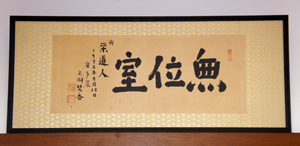
20130528_Rinzai_Zen_Sangha.pdf
From: http://rinzaizensangha.blogspot.com/search?updated-max=2013-05-28T10:52:00-07:00&max-results=1&start=1&by-date=false
“ALL DAY ZAZENKAI JUNE 16th, 2013”
“On Sunday, June 16th, 2013, there will be an ALL DAY ZAZEN-KAI with Eido Roshi. It will take place at Ungan Richard Diletto’s townhouse in the Bronx.”
“We will only accommodate up to 15 people so please RSVPs as soon as possible.”
“The cost for the ALL DAY ZAZEN-KAI including lunch will be $25 per person. The doors will open at 9:00 am for registration and Zazen will start at 9:30 am. There will be a Dharma talk by Eido Roshi in the afternoon and a Sarei after the end of Zazen at 5pm.”
ADDED:
04/13/13

20130410_Banko_SZ.pdf
Sweeping Zen
Post by former ZSS Board President
Randy Banko Phillips to Sweeping Zen
Addressed to Nonin Chowaney.
http://sweepingzen.com/unethical-practices/#comment-14932
“… I am Banko Randy Phillips and I was at one time president of the board of directors of the Zen Studies Society. At one time I considered myself a good friend of Eido Shimano. I traveled with him to Japan and worked on several books with him. When Robert Aitkin via the web asked for a formal reply by Eido Shimano to his charges (the first that I was aware of them) I tried to get Eido Shimano to respond. I was no longer president of the board but was still on it. It was apparent that his answer was not forthcoming.”
“The reason for this reply now is simply because of the subject of the above article. As a matter of record – you [Nonin Chowaney] – from the side-lines repeatedly cast aspersions at anyone who was ‘against’ Shimano or Shinge Roshi. You were an apologist for both – one might even say even a rabid apologist. To my reading – and I think many others – you responded often in a mean spirited manner. Almost anything that Genjo Osho said was picked apart ad nauseam – in a seemingly imperious manner as well – to what end? Shinge Roshi eventually called Shimano a 'psychopath' – nothing that either I nor Genjo Osho did. Maybe she is right – now Shimano is suing ZSS (for breaking a contract that he basically wrote himself) - ‘Let True Dharma Continue’ – indeed.”
“I wish to tell you [Nonin Chowaney] that your ‘actions’ made a very difficult time for those of us who were trying to deal with this situation from the inside much more difficult. I don’t believe that you can understand how much more difficult you made things – and what a negative drag it was dealing with your continued sniping. Was this sniping, goading, gloating, quick to anger and attack ‘unethical’ – I don’t presume to know by a long shot but there was apparently plenty of greed anger and delusion to go around. IMHO.”
ADDED:
04/06/13
20130405_Marinello_SZ.pdf
Sweeping Zen
(In response to Merry Benezra’s piece above.)
Genjo Marinello
April 5, 2013 at 8:11 pm
“Overall a good summery of the tragic history of ZSS and it’s founding abbot Eido Shimano. Indeed the current Abbot, Shinge Roko Sherry Chayat has done little to reach out to those most harmed or alienated over the decades. It is true that ZSS has employed the Faith Trust Institute and An Olive Branch to good effect to start, but has never followed up with an organizational apology (such as Rinzai-Ji has made), a long overdue and promised forensic audit, or democratic reorganization of the bylaws ('new' bylaws have not even been made public). Neither has ZSS sponsored any further reaching out to those most harmed or alienated. No detailed account of Eido Roshi’s wrong doings has been investigated by ZSS, let alone made public, except as can be derived by their counter suit to his complaint that he has not been paid enough.”
“Shinge Chayat has admitted to me that she has experienced ‘unexpected physical molestation’ from Eido Shimano, and though she categorically denies having an ‘affair’ with him, many people claim to have heard her directly say otherwise, including her ex-husband. In any case, it is clear that she too has been abused and taken in by him, publicly to this day expressing gratitude for ‘Eido Roshi’s uncompromising and penetrating Dharma Eye, which reveals directly the luminous power of the unconditional mind’ while privately calling him a ‘psychopath.’ ”
ADDED:
04/06/13

20130214_Kaiser_Buddhadharma.pdf

Buddhadharma Online
Thursday, February 14, 2013 At 3:00PM
Clinical therapist Tamara Kaiser asks why Buddhist communities have not adopted ethical standards long accepted by the rest of society.
Excerpted from the Spring 2013 issue of Buddhadharma: The Practitioner's Quarterly, available on newsstands and by subscription.
“What happens in your sangha if a member has a conflict with a spiritual teacher over alleged psychological or sexual exploitation? Is there room for open discussion about the conflict, or is any such discussion automatically interpreted as a violation of ‘right speech’ and suppressed? As a therapist and, for want of a better term, ‘spiritual seeker’ whose practice includes meditation, I have followed the discussion regarding sexual and psychological exploitation in the American Buddhist community for a number of years. I first became acquainted with these issues in the Buddhist community through my husband, a longtime Zen practitioner and meditation teacher. In my own profession, I have worked extensively with boundary issues in my roles as a therapist and supervisor of therapists (including those who have been sanctioned by a licensing board for violations of the profession’s code of ethics) and also as a teacher of therapists and their supervisors.”
“Some in the American Buddhist community compare their current dilemma to that of the therapeutic community in the 1970s, a time when therapists came to recognize problems of abuse and worked to develop effective means to address them. They suggest that Buddhist communities will need years, if not decades, to establish clear ethical principles and processes by which to protect members and hold teachers accountable.”
ADDED:
04/05/13
Drinking The Kool-Aid
Sweeping Zen
Posted by: Merry White Benezra on
April 5, 2013
Merry White Benezra, author of
Special Karma:
A Zen Novel of Love and Folly
http://specialkarma.wordpress.com/
Drinking The Kool-Aid
Posted by: Merry White Benezra on
April 5, 2013
Merry White Benezra, author of
Special Karma:
A Zen Novel of Love and Folly
http://specialkarma.wordpress.com/
“At 44, Eido was a beautiful man, charismatic, absolutely imbued with the atmosphere of Zen and its aesthetics. As a deeply invested Japanophile, I should have been a very easy mark. But, perhaps because of the tip-off, when Eido began to approach me I knew it wasn’t a unique or spontaneous attraction (it was being hit up); and, frankly, his technique was poor. 'How many men?' he would ask. 'Must have been more than one hundred?' How many humiliating heartbreaks would have been the better question.”
“Saying ‘No thank you’ did not (as I had expected) inoculate me from harm. ‘Do you like your room?’ he asked, as I was rising to leave our first dokusan meeting. An odd question, I thought. I said I did. I loved my room, my monk’s cell. If I had said my room was too small and my futon was too hard and I was lonely, would the conversation would have moved on to alternative sleeping arrangements, such as in the Roshi’s quarters?”
“On the last evening of the first sesshin of the training period, Eido invited me to enjoy a book of pornographic photos with him in his private study. I very quickly excused myself and reeled back to my room. Sesshin ended the following morning and I had to decide. Dai Bosatsu’s very first training period had just started; who was I to bring it to a close? So I let myself believe that Eido had simply made a mistake about the kind of student I meant to be. If other women actually wanted this, that was their business.”
“In the middle of the training period’s second sesshin, Eido revealed the news in dokusan that I had a ‘special karma.’ For someone in my frame of mind, this should only have meant a great spiritual karma. In a Zen monastery, it should only imply spiritual potential. But I had shown so little on-demand spiritual acumen at that point that I knew, in my heart of hearts, that my spiritual karma was not what he meant. Permitting myself to come to this realization in the pressure cooker of sesshin was excruciating. After failing to get a straight answer from Eido about the nature of my special karma and finding myself unable to do anything but cry, nonstop, I walked out of the sesshin. If I had not done so, I believe I could have experienced a complete mental breakdown. I thought long and hard about suicide. If my ‘special karma,’ wasn’t spiritual, what was left?”
“And, a week or so later, Eido confirmed that my special karma was, after all, to have won the lucky ticket that gave the winner a night (or more!) in bed with a real Zen master. It was a ticket I never redeemed.”
“I am watching the unfolding of Eido’s denouement with interest. Finally, at the age of 81, a sexual criminal is being publicly unmasked. But, shouldn’t this have happened in 1964, when his first victims were hospitalized? Or during one of the many Fuck Follies (as we called them) in the 1970′s, 1980′s and 1990′s—when evidence of Eido’s unremitting and unapologetic sexual pathology was brought, again and again, to the attention of the ZSS Board?”
“Recently it has come to light that Eido’s teacher, Soen Roshi, either failed to add Eido’s name to the list of lineage holders (the one that includes Bodhidharma) at Myoshinji, his home temple in Japan—or later removed it. There are many ways to look at this, and how it impacts Eido and his successors. One way is to ask, What is a piece of paper, anyway? But to my mind, Soen’s act is the one clean moment in this whole terrible affair.”
ADDED:
03/31/13
20130413_ZazenKai.pdf
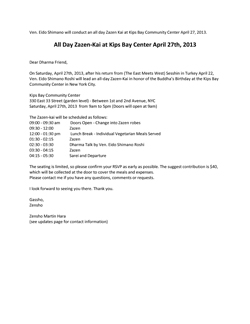
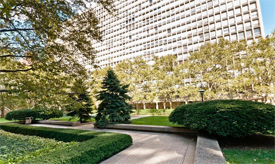
Ven. Eido Shimano will conduct an all day Zazen Kai at Kips Bay Community Center April 27, 2013.
All Day Zazen-Kai at Kips Bay Center April 27th, 2013
"On Saturday, April 27th, 2013, after his return from (The East Meets West) Sesshin in Turkey April 22, Ven. Eido Shimano Roshi will lead an all-day Zazen-Kai in honor of the Buddha’s Birthday at the Kips Bay Community Center in New York City."
"Kips Bay Community Center"
"330 East 33 Street (garden level) - Between 1st and 2nd Avenue, NYC"
"Saturday, April 27th, 2013 from 9am to 5pm (Doors will open at 9am)"
ADDED:
03/13/13
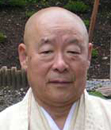
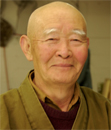
20130302_Shimano_Takabayashi.pdf
A Posthumous Letter to Genki Takabayashi from Eido Shimano.
[ Genki Takabayashi Passed Away
on February 25, 2013 ]
“March 2, 2013”
“To Genki Zenji Dai Osho”
“Only a few days ago, I came back from Japan.”
“The first news I got at JFK was your departure. As the news was so shocking, I could not find any appropriate words to express my inner feelings. It was totally impossible to share my sadness, neither in Japanese nor in English. It was simply sad.”
“You came to DaiBosatsu a few times and gave me many tea bowls of which you made. Even though we didn’t speak with each other over the phone every month or write so often, there was strong support knowing that there was another Japanese Rinzai teacher who gave his life for the transmission of Buddha Dharma to the West. Three of us, namely you, Sasaki Roshi and myself were like the legs of a tripod, and you were the youngest. Now only two of us are left. No Japanese Rinzai monk or teacher is interested to come to America, at least for now. Your departure made me feel extremely lonely. However, this too must be the arrangement of the Dharma. So I have no choice but to accept it.”
“I have been chanting Daihishu for you. I understand that on April 21st, Daibosatsu Mandala Day, there will be the 49th day memorial service for you in Seattle. On that day, I will be in Istanbul, Turkey, doing Sesshin. I will mention this during Teisho and together, with all participants, we do a special ceremony for you."
ADDED:
03/11/13
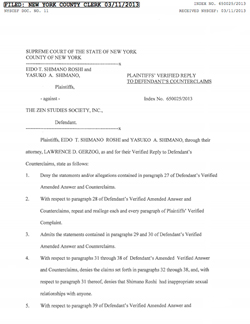
20130311_Plaintiffs_Reply.pdf
SUPREME COURT OF THE STATE OF NEW YORK
COUNTY OF NEW YORK
PLAINTIFFS’ VERIFIED REPLY
TO DEFENDANT’S COUNTERCLAIMS
------------------------------------------------------------------
EIDO T. SHIMANO ROSHI and
YASUKO AIHO SHIMANO,
Plaintiffs,
-against –
THE ZEN STUDIES SOCIETY, INC.,
Defendant.
INDEX NO. 650025/2013
RECEIVED NYSCEF: 03/11/2013
“Plaintiffs, EIDO T. SHIMANO ROSHI and YASUKO A. SHIMANO, through their
Attorney, LAWRENCE D. GERZOG, as and or their Verified Reply to Defendant's
Counterclaims state a follows:”
"4. With respect to paragraphs 31 through 38 of Defendants Amended Verified Answer and counterclaims, denies the claims set forth in paragraph 32 through 38, and with respect to paragraph 31 thereof, denies that Shimano Roshi had inappropriate sexual relationships with anyone."
“Counterclaims.
FIRST AFFIRMATIVE DEFENSE TO COUNTERCLAIMS
10. The counterclaims asserted in the Verifird Amended Answer and Counterckaims are barred, in whole or in part, by he doctrines of waiver, equitable estoppel, ratification and unclean hands,
SECOND AFFIRMATIVE DEFENSE TO COUNTERCLAIMS
11. One or more of the counterclaim arc barred by he applicable statute(s0 of limitations.
WHEREFORE, plaintiffs demand judgment against defendant:
l . On the first through fourth causes of action in an amount to be determined at trial.
2. On the fifth cause of action actual damages in the amount of $1,000,000.00;.
3. On the fifth cause of action punitive damages in the amount of $1,000,000.00;
4. Dismissal of Defendant’s Counterclaims;”
ADDED:
02/22/13

1958_Shimano_hospitalization.pdf
NAMU DAI BOSA
A TRANSMISSION
OF ZEN BUDDHISM
TO AMERICA
BY
Nyogen Senzaki
Soen Nakagawa
Eido Shimano
Edited,
with an Introduction by
Louis Nordstrom
THE BHAISAJAGURU SERIES
Pages 179 – 180
[October 1958]
“The shock of Senzaki' s death, together with the strain of years of overly intense practice, had made me weak; there was something wrong with my heart. That November, I entered a hospital, where I spent a difficult half year.”
“When I was discharged, I went back to Ryutaku Ji. Soen Roshi and I discussed the proposal to go to Hawaii. I had lost my enthusiasm for going to America. There no longer seemed to be any point in doing so. Also, I was too young to be the leader of a Zen group. But Soen Roshi suggested that there were at least two reasons to go: First, some recuperation was needed, and the Hawaiian climate would be very beneficial; second, I could continue my academic education at the University of Hawaii.”
Eido Shimano

[ 心 – "Shin" –This word would often be translated as "heart". However, because it was believed in Chinese culture for thousands of years that your consciousness and thoughts came from the big red organ in the middle of your chest, it also means "mind" or "spirit" and sometimes even "soul". ]
ADDED:
02/21/13
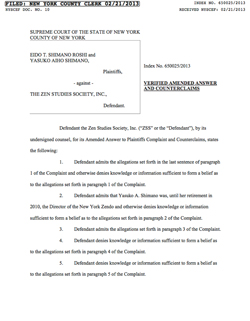
20130221_Ammended_Answer.pdf
SUPREME COURT OF THE STATE OF NEW YORK
COUNTY OF NEW YORK
VERIFIED AMMENDED ANSWER AND COUNTER CLAIMS
------------------------------------------------------------------
EIDO T. SHIMANO ROSHI and
YASUKO AIHO SHIMANO,
Plaintiffs,
– against –
THE ZEN STUDIES SOCIETY, INC.,
Defendant.
INDEX NO. 650025/2013
RECEIVED NYSCEF: 02/21/2013
“Defendant the Zen Studies Society, Inc. (‘ZSS’ or the ‘Defendant’), by its undersigned counsel, for its Amended Answer to Plaintiffs Complaint and Counterclaims, states the following:
“17. Defendant denies the allegations set forth in paragraph 17 of the Complaint.”
“19. Defendant denies the allegations set forth in paragraph 19 of the Complaint.”
“21. Defendant denies the allegations set forth in paragraph 21 of the Complaint.”
“23. Defendant denies the allegations set forth in paragraph 23 of the Complaint.”
“25. Defendant denies the allegations set forth in paragraph 25 of the Complaint.”
“27. The causes of action asserted in the Complaint are barred, in whole or in part, by the doctrines of waiver, equitable estoppel, ratification, and unclean hands.”
“30. As spiritual leader, Shimano Roshi had fiduciary and ethical duties to the ZSS members who were his students. “
“31. On numerous occasions, Shimano Roshi engaged in sexual relationships with students of his.”
“32. Shimano Roshi’s sexual relationships constituted an abuse of Shimano Roshi’s position.”
“33. Shimano Roshi’s sexual relationships were contrary to his fiduciary duty and the ethical guidelines for ZSS that Shimano Roshi had approved.”
“34. Shimano Roshi’s sexual relationships harmed the ZSS and ZSS members and students.”
“48. On information and belief, Shimano Roshi and Yasuko Shimano repeatedly and deliberately misappropriated ZSS funds to pay off victims of Shimano Roshi's sexual misconduct, on two occasions of which Yasuko Shimano ordered payments of $8000 and $3000 to be paid directly to victims or their associates as compensation for harm caused by Shimano Roshi's sexual misconduct.”
“49. Yasuko Shimano ordered that the funds be drawn on the ZSS' operating expenses from donations and membership dues.”
“50. By misappropriating funds, both Shimano Roshi and Yasuko Shimano violated their fiduciary and ethical duties, causing harm to the ZSS.”
ADDED:
02/17/13
20130217_Noomen_DBZ.pdf
Sweeping Zen
http://sweepingzen.com/sex-in-a-sacred-space/comment-page-1/
S. Noomen
February 17, 2013 at 3:15 pm
“I am still dumbfounded that something that obvious should be 'made clear' again and again. Ah well, my mistake, for yes apparently it does. For me it doesn’t feel right to keep focussing on (other people’s!) mistakes, but yes, I agree that it must be clear that a mistake is definitely a mistake! I couldn’t agree more that a teacher should be especially nurturing an honouring and taking care about a student’s aspiration. Not betraying the trust that is given to him seems very obvious to me…”
“I am Steven Noomen from Holland, a former lay student of Mr. Shimano at Bai Bosatsu Zendo, and I write this letter to let you all know I am utterly apalled to hear about his behaviour that made him decide – clearly very much overdue – to 'retire' as abbott.”
“Mr. Shimano’s behaviour brought much shame and disgrace to himself, to his family, to Zen Buddhism in general, and to the Rinzai Zen tradition in particular. It is no longer fashionable today, but people from samurai families – like Mr. Shimano, I heard – would rather kill themselves than live with such shame and disgrace. However, much more importantly than just (!) the shame, it caused very much harm in countless ways, in the first place by obscuring instead of demonstrating the right way to live the Buddha Dharma, and thus confusing countless seekers.”
“When I was at DBZ my fellow students told me that it was nothing but an exaggeration of some sensation hungry and trigger, or rather, pen happy reporter that wanted to blow up one small thing that once had happened years ago. However, now it seems to me this means their minds were already heavily poisoned. The general attitude seemed to be something like: ‘You can think whatever you want, but Roshi is above all serious criticism, no matter what, because you know nothing and he is a roshi. And why should you judge or get involved at all? It is not your business.’ ”
“Of course it is my business! Very much so. If I’m there as a student, then I demand at the very least some sincerety of the one in charge. Nyogen Senzaki reminded us at his death bed 'minute after minute watch your steps closely.' However, for nearly forty years Mr. Shimano stubbornly refused to see and admit his mistakes were mistakes.”
“As for myself, I feel now deeply ashamed of having been part of such a deceitful tradition. And be sure all Zen groups in Holland will know about it. I will never refer to Mr. Shimano as ‘Roshi’ any more.”
ADDED:
02/14/13

20130214_BC_Pension.pdf
No pension for Eido Shimano
The Buddhist Channel, Feb 14, 2013
Kuala Lumpur, Malaysia
“That person was asked to leave because he failed the fiduciary duty expected of a person of the Buddhist robe, that is to help bring peace and enlightenment to people that come to him. What transpired instead is one who had become a lustful demon disguised as a person of the robe and through it, had taken sexual advantage of people who he purports to help bring peace and enlightenment.”
“While Eido Shimano may have been the catalyst of establishing the roots of Zen within ZSS, it certainly does not mean that ZSS is obligated to support its founder for life. The crux of the matter is this: There have been allegations of sexual misconduct on the part of Eido Shimano. There are explicit evidences forwarded by victims themselves. These accounts are compiled and documented for public view via the Internet. “
“By all accounts this monk has been ‘defeated’ in the traditional sense of Dharma-Vinaya (Buddha’s teachings and his discipline).”
ADDED:
02/14/13
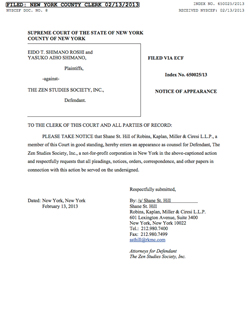
20130213_Not.of Appearance.pdf
SUPREME COURT OF THE STATE OF NEW YORK
COUNTY OF NEW YORK
NOTICE OF APPEARANCE
------------------------------------------------------------------
EIDO T. SHIMANO ROSHI and
YASUKO AIHO SHIMANO,
Plaintiffs,
– against –
THE ZEN STUDIES SOCIETY, INC.,
Defendant.
INDEX NO. 650025/2013
RECEIVED NYSCEF: 02/13/2013
“PLEASE TAKE NOTICE that Shane St. Hill of Robins, Kaplan, Miller & Ciresi L.L.P., a member of this Court in good standing, hereby enters an appearance as counsel for Defendant, The Zen Studies Society, Inc., a not-for-profit corporation in New York in the above-captioned action and respectfully requests that all pleadings, notices, orders, correspondence, and other papers in connection with this action be served on the undersigned.”
ADDED:
02/14/13
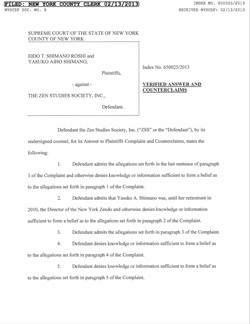
20130213_Ans.andCounterclaims.pdf
SUPREME COURT OF THE STATE OF NEW YORK
COUNTY OF NEW YORK
VERIFIED ANSWER AND COUNTER CLAIMS
------------------------------------------------------------------
EIDO T. SHIMANO ROSHI and
YASUKO AIHO SHIMANO,
Plaintiffs,
– against –
THE ZEN STUDIES SOCIETY, INC.,
Defendant.
INDEX NO. 650025/2013
RECEIVED NYSCEF: 02/13/2013
“FIRST COUNTERCLAIM
28. Defendant repeat the foregoing allegations as if set forth herein.
29. Shimano Roshi was the spiritual leader of the ZSS
30. As spiritual leader, Shimano Roshi had fiduciary and ethical duties to the ZSS members who were his students.
31. On numerous occasions, Shimano Roshi engaged in sexual relationships with students of his.
32. Shimano Roshi s sexual relationships constituted an abuse of Shimano Roshi’s position.
33. Shimano Rosbi’s sexual relationships were contrary to his fiduciary duty and the ethical guidelines for ZSS that Shimano Roshi had approved.
34. Shimano Roshi’s sexual relationships harmed the ZSS and ZSS members and students.
35. By having sexual relationships with students, Simano Roshi caused damage to ZSS’s national and international reputation.
36. After Shimano Roshi’s sexual relationships became known to members of ZSS and the wider Buddhist community, contributions to ZSS fell precipitously.
37. Shimano Roshi's actions violated his fiduciary duty, his ethical duty and fully meet the elements for liability under the faithless servant doctrine.
38. The ZSS is entitled to payment of damages in an amount to be determined at trial forth material harm to its revenue and reputation caused by Shimano Roshi's violationsof his fiduciary and ethical duties, and in particular his sexual misconduct.”
“SECOND COUNTERCLAIM
39. Defendant repeats the foregoing allegations as if set forth herein.
40. The ZSS is entitled to a disgorgement of all alary payments to Shimano Roshi during the period of his violations of his fiduciary and ethical duties and in particular his sexual misconduct.”
“THIRD COUNTERCLAIM
41. Defendant repeats the foregoing allegations as if set forth herein.
42. The Shimano Roshi and Yasuko Shimano caused the ZSS Board to enter into an unfunded Deferred Compensation Agreement ('DCA'). On information and belief, Shimano Roshi caused the same counsel to present both Shimano Roshi and Yasuko Shimano on the one hand and the ZSS on the other hand in 'negotiations' for the DCA.
43. The DCA provides, inter alia that Shimano Roshi and Yasuko Shimano receive for life 70% of their respective final year's salary, as well as a life tenancy in the ZSS's cooperative apartment, which was fully paid for by the ZSS. The DCA was entirely unfunded.
44. The DCA is not an enforceable agreement, at least because it was not entered into at alms length because it was unfunded, and because Shimano Roshi's violations of his fiduciary and ethical duties have caused the ZSS significant los of reputation membership and donations, such that Shimano Roshi s actions have left the ZSS without sufficient funds or prospects, such that payments made according to the DCA would violate the fiduciary responsibility of the ZSS Board of Directors.
45. The ZSS is entitled to a disgorgement from Shimano Roshi and Yasuko Shimano of all payments to them under the DCA.
46. Shimano Roshi and Yasuko Shimano should immediately vacate the ZSS cooperative apartment and effect a full and official transfer of title to the ZSS or its agent.”
“WHEREFORE Defendants pray that this Court grant judgment, as follows:
(a) Dismissing Plaintiff's Complaint.
(b) On the First Counterclaim, an Injunction ordering Shimano Roshi pay damages commensurate with the material harm the ZSS's revenue and reputation caused by Shimano Roshi's violations of his fiduciary and ethical duties, and in particular his sexual misconduct.
(c) On the second Counterclaim an Injunction ordering Shimano Roshi to repay to the ZSS all salary payments made to Shimano Roshi during the period of his violations of his fiduciary and ethical duties, and in particular his sexual misconduct.
(d) On the Third Counterclaim an Injunction ordering (i) Shimano Roshi and Yasuko Shimano to repay to the ZSS all payment made to them under the DCA and (ii) Shimano Roshi and Yasuko Roshi immediately to vacate the ZSS cooperative apartment and effect a full and official transfer of title to the cooperative apartment to the ZSS or its agent;
(e) An Award to the Defendant of $2 million and
(f) An Award to the Defendant of its reasonable attorneys fees and costs incurred in defense of this action"
ADDED:
02/13/13
20130213_Shimano_ZSS.pdf
Eido Shimano responds to a letter issued by the Board of Directors of the Zen Studies Society on January 31st, 2013.
Letter to the Sangha From Eido Shimano
“It was with a heavy heart that I read the letter circulated to you by the current Board of Directors of the Zen Studies Society on January 31st, 2013. It contained so many distortions, inaccuracies and outright falsehoods that I could not simply let it pass without comment. However, I have no intention of honoring the scurrilous ad hominem attacks against me personally with specific responses.”
“When I became the leader of the Zen Studies Society, it had one member and no assets. With the support of my wife Aiho and members of the Sangha, I was able to grow the ZSS to the point where, by my retirement, it had become perhaps the pre-eminent center of Zen Buddhist practice and education in the United States. Not only did we establish the New York Zendo, now a beautiful and spiritual center of study in the middle of Manhattan, but we also established Dai Bosatsu Zendo, a monastery in the Catskills Mountains of New York State as a retreat for the members of the ZSS Sangha to do retreats. Both have become nationally renowned centers of Zen study and practice.”
“When I was Abbott, we had no big trouble raising sufficient funds to support these two facilities and also to meet the operating needs of the ZSS. According to the letter sent by ZSS, this is no longer the case. Responsibility for this can only be laid at the feet of the current directors, who apparently are not willing to put forth the time, dedication and ability necessary to make successful fund-raising efforts.”
“In 1995, the ZSS Board of Directors entered into Deferred Compensation Agreements, essentially pensions, with me and my wife, in recognition of our years of achievement and service. The allegations being made regarding my alleged behavior were known then, and yet the ZSS Board, an independent entity, agreed to the Deferred Compensation Agreements. During our time receiving salaries from the ZSS, my wife and I accepted far less than we could have earned in other fields of endeavor. This was because of our dedication to the Dharma, and the fact that neither of us is motivated by the need for wealth. Had we been so, we could have achieved it through a career of lecturing, writing, and doing other things consistent with placing our own needs before that of the ZSS. The Deferred Compensation Agreements reflect the same principles, and are more modest, quite frankly, than other arrangements made on behalf of similarly situated individuals.”
ADDED:
02/08/13
An Open Letter From Merry White Benezra
To Roko Sherry Chayat.
“I was a resident at Dai Bosatsu Zendo from July 1976 (including the opening kessei) to February 1977, and again from January to September 1978. My experiences with Eido Shimano are novelized and recorded in my book, Special Karma, a book I hope you will have a chance to read.”
“Yet, when I arrived at DBZ a mere six months later in July 1976, Eido was sexually involved with a resident student, Sxxxxx Jxxxxx Lxxxxx. By September, he was relentlessly propositioning me (the subject of my book). When I returned to DBZ in January 1978, he was sexually exploiting three new resident students. So much for the useless promises of a sexual addict.”
“And it is my understanding that the Board was made aware of Eido's ongoing sexual activities and lies around this time. Inexplicably, the Board permitted him to continue.”
“I am writing to take exception with the ZSS Board's recent Dear Sangha and Dharma Friends letter, which you co-signed and which says, ‘we do remain grateful for [Eido's] visionary work in founding New York Zendo and Dai Bosatsu Zendo and for his five decades of inspiring teaching' and therefore 'wanted to provide appropriate care for our teacher and his wife, Aiho Yasuko Shimano, after their retirement.’ "
“Eido's nonstop sexual predations over decades and decades have caused harm that cannot be counted. Harm to the women he lied to and abandoned and slandered after enjoying them, and harm to the cause of Buddhism in America. This man does not have anything owed to him. Can it possibly be that his ZSS contract does not have certain provisions, exceptions for fraudulent misrepresentation on his part?”
ADDED:
02/02/13
20130202_BC_Shimano.pdf
The Buddhist Channel
www.buddhistchannel.tv/index.php?id=70,11300,0,0,1,0
Former Abbot of Zen Studies Society sues for "breach of contract"
“New York, USA -- Disgraced former Abbot of Zen Studies Society (ZSS), Eido Shimano and his wife Aiho Shimano, are currently suing ZSS for damages in excess of US$ 2 million. The suit was filed in a New York court. The couple allege that ZSS breached their contract with them and claim that they have not received any retirement payments since August of 2012.”
“Among other matters mentioned in the suit is that the ZSS had withheld a significant collection of spiritual and artistic items which were used to decorate the New York Zendo and DBZ properties and were used in various services at ZSS New York and DBZ Zendos. Shimano claims that these items were purchased using their own funds and sometimes by gift.”
“Mr. Shimano had been the abbot of the Zen Studies Society (http://www.daibosatsu.org/) since 1965. He resigned in December of 2010 amid a backdrop of allegations about the married abbot’s sexual liaisons with his students and with other women.”
“The rumors began to unravel when, in 2008, the University of Hawaii at Manoa unsealed some papers donated by Roshi Robert Aitken (1917-2010), a leading American Buddhist and founder of the Buddhist Peace Fellowship (http://www.bpf.org/). A large portion of these allegations which have been documented over at the Shimano Archive. Myoshin-ji in Japan also recently announced “no connection” to Shimano or his lineage in December. As of press time, the ZSS has made no court-legal response. The following is an open letter to the public explaining their position on the matter (issued via viazenstudies.ccsend.com, Jan 31, 2013).”
ADDED:
01/31/13
An Important Letter From
The Zen Studies Society
To Sangha And Dharma Friends.
“The Zen Studies Society Board of Directors would like to provide you with an update on several significant issues and challenges currently facing the Zen Studies Society.”
“As a result of this filing of a public lawsuit, confidentiality has been lost. We are now able to share more information on how we have moved to address Eido Roshi’s ethical misconduct and negotiate our financial responsibilities to him.”
“The Board made monthly payments to the Shimanos during 2011 and most of 2012, while attempting to restructure the unfunded DCA into something more manageable. In 2011, direct payments to the Shimanos and other costs associated with support of the DCA totaled $98,534.57. Note: Sangha donations were not used for those payments; they have been used only for operating costs at our two facilities. During this period, we communicated to Eido Roshi on numerous occasions our concern regarding the lack of funding for the DCA.”
“In December 2010, Eido Roshi wrote a letter to The New York Times that accused Mark Oppenheimer, the journalist who wrote an article about the teacher-student affair that Eido Roshi himself had previously openly acknowledged, of ‘obtaining his information from second and third-hand sources.’ ”
“Please be assured, however, that we are doing everything possible to insure that our centers will weather these challenges and go on to a bright and vibrant future. Despite our present difficulties, there is great enthusiasm for the practice at both New York Zendo Shobo-ji and Dai Bosatsu Zendo Kongo-ji.”
ADDED:
01/30/13
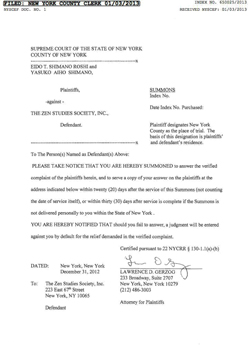
20130103_Shimanos_vs._ZSS.pdf
SUPREME COURT OF THE STATE OF NEW YORK
COUNTY OF NEW YORK
------------------------------------------------------------------
EIDO T. SHIMANO ROSHI and
YASUKO AIHO SHIMANO,
Plaintiffs,
– against –
THE ZEN STUDIES SOCIETY, INC.,
Defendant.
INDEX NO. 650025/2013
RECEIVED NYSCEF: 01/03/2013
“9. In 1995, in recognition of the outstanding and long-time leadership of the ZSS by Shimano Roshi, and the devotion and excellent work of Mrs. Shimano as Director of the New York Zendo, two contracts were entered into on July 25, 1995 between the ZSS and Shimano Roshi and Mrs. Shimano, respectively. The contract entered into between ZSS and Shimano Roshi is attached hereto as Exhibit A and the contract entered into betweenZSS and Mrs. Shimano is attached hereto as Exhibit B.”
“10. The contracts provided, among other things, that both Shimano Roshi and Mrs. Shimano 1) would receive pension or deferred compensation payments after their retirements for each of their lifetimes, 2) would receive the payment of health insurance premiums for each of their lifetimes and 3) that the ZSS would pay the maintenance, assessments, utilities and telephone expenses for the cooperative apartment located at 333 East 69th Street, New York, New York occupied by the Shimanos since 1984. Although not specified in the written contracts, Shimano Roshi was promised treatment as ‘Abbott Emeritus’ and full use of both the New York Zendo and DBZ for the conducting of services, retreats and classes, and for private study.”
“11. On December 31, 2010, Shimano Roshi retired as Abbott of ZSS. On December 31, 2010, Mrs. Shimano retired as Director of the New York Zendo of ZSS.”
“12. Payments as specified in the contract were begun on January 1, 2011. Beginning on February 1, 2011, the pension or deferred compensation payments were reduced unilaterally by the ZSS Board by 30%, but the other terms of the contract were adhered to. This continued until August 2012, when, again unilaterally, the ZSS Board stopped making any pension or apartment related payments due under the contracts. No formal written explanation of the reason for stopping the payments was ever made to either Shimano Roshi or Mrs. Shimano.”
“13. In addition, after their retirements, the ZSS Board of Directors changed the locks at the New York Zendo and did not get replacement keys to the Shimanos (see exhibit C, attached.)”
“14. Over the years, Shimano Roshi and Mrs. Shimano acquired, sometimes by purchase using their own funds, sometimes by gift to one or the other or both, personally, and sometimes by purchase by or donation to the ZSS as significant collection of spiritual and artistic items which were used to decorate the New York Zendo and DBZ properties and were used in various services at ZSS New York and DBZ Zendos. An itemization of the items belonging to the Shimanos located at the New York Zendo was prepared by Shimano Roshi and attached hereto as Exhibit D, with the items belonging to the Shimanos marked with asterisk. Shimano Roshi attempted to make a similar inventory of property located at DBZ belonging personally to the Shimanos, but was stopped from doing so by a ZSS Board of Directors member.”
“15. On or about December 13, 2012 the Shimanos made a demand of the ZSS, through their attorney, to return to them those spiritual and artistic items which are their personal property and which are in the posseion of the ZSS. The ZSS has refused to return the items.”
ADDED:
01/05/13

20130104_NYT.pdf
New York Times
Beliefs
No Religious Exemption When It Comes to Abuse
By MARK OPPENHEIMER
Published: January 4, 2013
“Take Zen Buddhism, the paragon of open, nonhierarchical spirituality. Anyone may practice Zen meditation; you do not have to convert, be baptized or renounce your old religion. Yet leaders of major Zen centers in Los Angeles and New York have recently been accused, on strong evidence, of exploiting followers for sex. This weekend, Zen teachers ordained by Joshu Sasaki, the semiretired abbot of the Rinzai-ji Zen Center in Los Angeles, are holding a retreat to discuss sexual harassment accusations against Mr. Sasaki. The Zen Studies Society, in New York, is under new leadership after its longtime abbot, Eido Shimano, was forced out after he was accused of inappropriate sexual liaisons with students and other women.”
“Paul Karsten, a board member of the Rinzai-ji Zen Center, said the intense relationship between Zen teacher and student can be trouble. For example, in private meetings, some teachers touch students. The touching is never supposed to be sexual, but there can be misunderstandings, or outright abuse. ‘I know of stories I have heard,’ Mr. Karsten said, ‘where people feel like this experience has been very important to them, and others where they feel like it has been the opposite.’ ”
“Mr. Karsten acknowledged complaints against Mr. Sasaki — largely on the Internet, some anonymous — that the teacher went beyond what most reputable teachers would consider appropriate. But Mr. Karsten seemed torn between valuing extremely close teacher-student relationships and acknowledging the dangers.”
“ ‘People see there has been something going on with students that on the one hand has been remarkable, and on the other hand has been inappropriate in teacher-student practice,’ Mr. Karsten said. ‘And consensual, or nonconsensual?’ ”
“Questions e-mailed to Mr. Karsten for Mr. Sasaki, who is 105, were not answered.”
ADDED:
12/31/12
20121231_Genkaku_Idiocy.pdf

GENKAKU-AGAIN (adam fisher)
MONDAY, DECEMBER 31, 2012
idiocy and the Internet
“The posted letter is entitled ‘An Open Letter to Sherry Chayat, the Zen Studies Society and Other Concerned Persons.’ It is written by Jeff Shore, a professor at Hanazono University who has involved himself in the long-running scandal surrounding the Zen teacher, Eido Shimano. With Shore's involvement, Shimano's standing within the Zen community (whatever that may mean) and his sexual and financial predations have been brought into clearer focus ... not clear focus, mind you, just clearer focus.”
“Shore's efforts joins the efforts of others (notably the Shimano Archive), to shine a bright light into dark places of institutional Zen. His efforts, like other efforts before, exhibits some desire to be the conquering hero of the whole miasma of a situation (look ma! I've found a solution! I did what others could not! I've got a handle on a handle-less mess ... and deserve imperial applause). No matter ... everyone wants to be king of this rubbish heap and as far as I can see, no one is or ever will be ... it's a joint effort in which each contributes.”
“But my friend in Germany, the one who sent along the link to Shore's letter, added this sentence: ‘For whatever reason he [Shore] doesn't want it on the Shimano Archive.’ "
“The Shimano Archive is the go-to source for documentation surrounding Shimano's activities. It may contain opinions, but it does not express opinions. It is not some Buddhist play pen, some Internet bulletin board. It does not bow to this and disdain that. It is a collection, plain and simple. And in that role, it collects damn near everything related to Shimano's manipulations and depredations.”
ADDED:
12/27/12
12/27/12

20121227_Shore_OBC.pdf
A Letter to Sherry Chayat From
Jeff Shore. Published on the OBC Connect
Website:
http://obcconnect.forumotion.net/t652-latest-development-in-the-ongoing-shimano-situation
http://www.myoshinji.or.jp/about/post_10.html
It's heartbreaking, yet undeniable: you and many others have been duped. Plain and simple. With or without 'credentials.' "
ADDED:
12/21/12
20121221_Myoshinji.pdf
臨済宗妙心寺派宗務本所
19th, Dec, 2012 Myoshinji School of
Rinzai Zen Buddhism.
http://www.myoshinji.or.jp/about/post_10.html
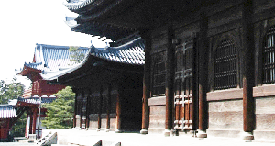
"Myoshinji (妙心寺, Myōshinji) is a large temple complex in northwestern Kyoto which includes about 50 subtemples in addition to its main buildings. While a few of the temple halls can be entered, the majority of the subtemples are closed to the public. However, visitors are free to wander along the walking paths. In several ways the temple complex resembles Daitokuji Temple."
"Within the Rinzai sect of Zen Buddhism, Myoshinji is the head temple of the Myoshinji school with over 3000 affiliated temples and calls itself the largest of all Zen temples. Myoshinji was founded in 1337 when an abdicated emperor had an imperial villa converted into a Zen temple."
"Myoshin-ji has received many inquiries regarding its relationship with the Zen Studies Society in New York ever since the publication on 20 August 2010 of an article in the New York Times regarding the behavior of the Society's former director, Eido Shimano."
[ See Entry of: 08/21/10 ]
"On the occasion of establishing the Zen Studies Society, Eido Shimano stipulated that the Society was to have no relation to Myoshin-ji or any other branch of Japanese Rinzai Zen Buddhism. As far as Myoshin-ji is concerned, all along it has had no connection with Eido Shimano, his activities or organizations, including Dai Bosatsu Zendo and all affiliated Zen Studies Society institutions, nor is Eido Shimano or any of his successors certified as priests of the Myoshin-ji branch of Zen or recognized as qualified teachers."
[ See Entry of 12/17/71 "Note that in 1971; Ryutaku-Ji Monastery in Mishima, Japan, is referred to as 'our parent monastery in Japan.' "]
[ See Entry of 09/15/72 "ZSS Announcement of Dharma Transmission." ]
[ See Entry of 10/19/82 "Minutes of ZSS Board of Trustees Meeting. Declaration of Independence From Any Other Zen Buddhist Organization Here or Abroad." ]
ADDED:
12/16/12
12/16/12
2012_Shimano_NewYears.pdf
Announcement by
Zensho Martin Hara.
"Kips Bay Community Center 330 East 33 Street (garden level) - Between 1st and 2nd Avenue on Monday, December 31st, 2012 from 2:30pm to 10:30pm (doors will open at 2 pm)."
ADDED:
11/28/12

20121128_Batchelor.pdf
Buddhism and Sex: the Bigger Picture
by Stephen Batchelor
“Wherever people are in a position of power over other people, it is inevitable that some will use that power to pursue and fulfill their own sexual desires.”
“The Buddha himself was accused of having sexual intercourse with the female ascetics Sundari and Cinca.”
“The root of the power disparity between teacher and student lies in the belief that the former is ‘enlightened’ in some sense, while the latter is not.”
“As the Buddhist tradition developed over time into an organized religion, the gap between the ariya and the puthujjana grew wider and wider.”
“It is no coincidence that the majority of cases of abuse reported by students come from the Tibetan and Japanese Zen traditions, i.e. those that place greatest emphasis on submission and obedience. This is not to say that such abuse is absent in the Theravada schools – it occurs there too; nor does it imply that there are no teachers in the Tibetan and Zen traditions who behave with ethical integrity – for there are many."
“According to the earliest texts, the role of the ariya (teacher) is not to make the puthujjana (student) dependent on him, but to enable the person to become ‘ennobled’ by entering the stream (sotapatti) of the eightfold path. Thus the role of the teacher is to help the student to stand on his or own feet as quickly as possible.”
ADDED:
11/16/12
08/16/10
20100816_Takabayashi.pdf
An Unsolicitated Email from Glenn Webb to Kobutsu Malone concerning Genki Takabayashi (Genjo Marinello's teacher before Eido Shimano).
“It seems that Genki was an orphan who was raised to be a priest at Ryutaku-ji. (Actually, Hirano had the same experience after his parents were killed in a car accident, but that is another story.) Genki had no pressure as a first son of a priest to become a priest, and probably grew up somewhat resentful at his fate. Apparently, when he was around 18 his teacher (his adopted father, Gempo Roshi) sent him to the grand priest-training-hall (sodo) of Daitoku-ji."
“As Morinaga put it to me, on those occasions when he could go out on the town, Genki was a womanizer and pub-crawler. He got one woman from the neighborhood pregnant, she refused to abort the child, and Genki refused to marry her, thereby bringing shame to her family and to the temple. So he was kicked out of Daitoku-ji. As a favor to a friend, Morinaga Roshi took him in. But he made Genki’s life hell: when I met him at Daishu-in he was low man on the totem pole, relegated to menial tasks and never allowed to engage in anything important.”
“Gradually Genki-san began to relate to SZC members personally, with sign language as well as broken English. I encouraged him to improve his English skills. Sometime around 1980 I remember hearing people refer to him as Roshi. I spoke to him about it, and he again said that was not appropriate. We talked about the term. And I said it was alright with me if it was alright with him, because many people seemed to want to have a Roshi, and I had explained to people that at that point my Roshi was still alive and I did not feel they should call me by that title (see my essay 'On Roshi' in FB and my blog.)“
“However, I also became aware that open sexual couplings and marijuana use were part of the scene. Later, one of the couplings turned out to be Genki himself and a European female student. When she became pregnant she ultimately decided with his encouragement to have an abortion. I assumed that we would hold a traditional mizuko ceremony but he refused. So I conducted a private one for the woman. Most people in the house did not know about the pregnancy or abortion, and those who did never mentioned it.”
“At some point Genki-san said he wanted to live separately in a house of his own. We found one, rented it, and gradually the entire training operation shifted to Genki’s house. The Zen House was still in the budget, and things were tight. But when some land near Mt. Rainier became available, Genki suggested we buy it and build a true Zendo there for our sesshins. One member was an architect and he drew up some plans, first for the mountain retreat and another for an in-city site. The retreat was built entirely by Sangha members. Countless hours of labor were put into the construction of the Zendo.”
“I think we held three sesshins there before Genki dropped a bombshell: he announced at a board meeting that he would no longer be part of SZC or Tokugan-ji. People who wanted to stay with me were welcome to do so, but those who wanted to train in the true Rinzai tradition should follow him. This caused a painful break, leaving my side holding the bag. I conducted about five sesshins in the mountain Zendo, before we had to sell it (to a Tibetan-style group); we found a house near the UW to rent for some of the students who stayed with me to live and practice.”
ADDED:
11/16/12
11/16/12
20121116_Everybody_Knows.pdf
Everybody Knows
Kyozan Joshu Sasaki Roshi and Rinzai ji.
Joshu Sasaki Roshi, the founder and Abbot of Rinzai ji is now 105 years old,
and
he has engaged in many forms of inappropriate sexual relationship with those who have come to him as students since his arrival here more than 50 years ago.
by Eshu Martin
"His career of misconduct has run the gamut from frequent and repeated non-consensual groping of female students during interview, to sexually coercive after hours 'tea' meetings, to affairs and sexual interference in the marriages and relationships of his students. Many individuals that have confronted Sasaki and Rinzai-ji about this behaviour have been alienated and eventually excommunicated, or have resigned in frustration when nothing changed; or worst of all, have simply fallen silent and capitulated. For decades, Joshu Roshi’s behaviour has been ignored, hushed up, downplayed, justified, and defended by the monks and students that remain loyal to him."
"Based on my own experience as a student and monk in Rinzai-ji from 1995-2008 and many conversations during that time and since, it seems to me that virtually every person who has done significant training with him, the Rinzai-ji board of Directors, and most senior members of the Western Zen community at large know about his misconduct. Yet no one to my knowledge has ever publicly spoken out. Certainly, as an organization, Rinzai-ji has never accepted the responsibility of putting a stop to this abuse, and has never taken any kind of remedial action."
"For many years, I have struggled with my own part in this calamity; I have known but have not spoken out. I have watched the situations with Eido Shimano and Genpo Merzel unfold, and I have been overwhelmed by the courage of those brave Zen folk who have stood up to speak the truth, knowing that it would be painful, and would have very real repercussions in their lives, and in the lives of those around them. I have been reminded of the strength and courage that is required to speak the truth when it calls into question an individual of such high standing."
"I have decided to come forward now because to allow this kind of abuse to go unacknowledged, when so many of us know it has been happening is, in my opinion, inexcusable. I will not be silent any more. I feel that to ignore the damage caused by Joshu Sasaki and the leaders of Rinzai-ji who allowed it to continue is both a huge disservice to those who have been abused, and a lost opportunity for all of us to learn from our mistakes. I feel obliged to speak the truth about this matter, insofar as I am able to know it. I believe that only by doing so is it possible for any healing to begin. I hope that I may be an example for others, so that they may find the courage to speak out about their experiences with Joshu Sasaki and Rinzai-ji. My hope is that by being accountable to each other, and working together, honestly and transparently, we will all be able to proceed more clearly into the future."
ADDED:
11/14/12
11/10/12

20121110_Ignored_Survivor.pdf
genkaku-again blog
A Scathing Retort by a Survivor
to Sherry Chayat's Letters to Jeff Shore.
by "Ignored Survivor".
“The words you have so cavalierly thrown at us victims are but poison venom for our wounds. ‘I am beyond saddened by your devastating account, which is so courageous and clear, so profound in its insights.’ We don’t care how ‘beyond saddened’ you say you are Roko; to us it’s only more obsequious, but ultimately meaningless rhetoric.”
‘Be assured that I will read it aloud this weekend, although I can't promise to read it without sobbing; that I am listening acutely to what you say, and that my heart is pierced by it.’ Roko, we don’t care if you sob or not, we know you well enough to see your crocodile tears for public consumption and could care less how you say your heart is ‘pierced.’ We don’t care how many times you say, ‘I hear you.’ Or how many times you cajole others into to shouting out ‘We hear you!’ on your command. Because we know full well that you don’t care and have never cared for our welfare. We know that you were fully cognizant of Eido Shimano’s predations and for years sent women students from Syracuse to DBZ.”
"You are right, the complex and difficult loyalties have not allowed a clean and strong separation. I hear you."
“ ‘The complex and difficult loyalties’ Roko? What planet are you living on? Women and children were raped… everyone was lied to, people were defrauded, good, honest hardworking, well-intentioned Zen students were discarded on a whim. You supported all this, you still support this as you sit and hem ‘n haw about your status in ‘the lineage.’ Where are your sobs now Roko? Tell us again how your heart is ‘pierced’, as you go looking for personal legitimacy in the musty records of archaic temples in foreign countries.”
“Show us just what you have done tangibly to formally address the predation of Eido Shimano in THIS country, over the past 46 years… Show us results Roko, don’t try to shovel over ‘Samoan circles’ as tangible results… such efforts are but theatrics generated by corrupt, incestuous pseudo-organizations designed to maintain the status quo.”
“Jeff Shore outlined the sanest, most compassionate solution to the Shimano-dilemma floated so far. Close down the organization, put it into receivership for the benefit of all those who were injured. Take off your robes, renounce your titles, publicly apologize for everything and quietly go home.”
[ See post of: 10/21/12 ]
ADDED:
11/02/12
11/02/12
20121002_Choboj.jpg
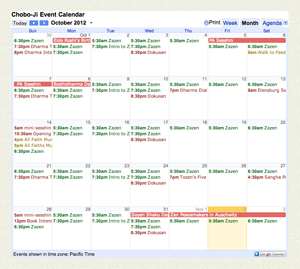
A Sweeping Zen Post by Patricia Ivan
to Genjo Marinello Concerning
his Auschwitz "Dark Tourism"
with Bernie Glassman
and his Temple's Calendar Listing
of Shimano's Birthday.
"PATRICIA IVAN says:
"Mr. Marinello,
I see on your sangha calendar that you celebrated Shimano’s birthday on October 1st. Can you tell me why you continue to honor that day? It makes me question whether Shinge and the ZSS board are alone in failing to 'sufficiently publicly repudiate and distance themselves from Shimano'.
Many who have gone to Auschwitz have reflected upon the role the German people have played in support of the lethal power of a 'narcissist of the highest caliber'. I wonder what you would think of Germans celebrating Hitler’s birthday."
ADDED:
10/26/12
10/25/12
(Full Version)
20121025_ZFI_thread.pdf

Yet Another Zen Forum International Suppressed Thread on Shimano.
(Sanitized Version)
http://www.zenforuminternational.org/viewtopic.php?f=64&t=5712&start=160
Eido Shimano's lineage...
October 25, 2012 Page 9
"MODERATOR'S NOTE:"
"This thread seems to be stirring the three fires and has needed heavy moderation since its inception. I'm closing this topic down so that I can discuss the appropriate moderation approach to this difficult subject with the other moderator (Pedestrian) who has not been involved in the topic, as well as the rest of the moderation team."
"~So-on Mann"
[See entries of 08/17/12, 08/19/12 and http://www.zenforuminternational.org/viewtopic.php?f=73&t=3584&start=2150 ]
ADDED:
10/26/12
10/25/12

20121025_Chowaney_ZFI.pdf
A Post to:
Zen Forum International
by Nonin Chowaney
“A short time ago, I spoke with Roko Shinge Chayat, and she asked me to post here that she was shocked to hear that her private e-mail exchange with Jeff Shore, which she regarded as privileged information, was published without her permission. She also said that she hadn't known that it had been published before I told her, for she doesn't read publications that would concern themselves with and publish something like this. Also, she doesn't intend to respond in any way.”
ADDED:
10/21/12
10/21/12

20121021_Chayat_Shore.pdf
An email exchange between Sherry Chayat and Jeff Shore, professor of Zen in the Modern World at Hanazono University in Kyōto, the sole Rinzai-affiliated university in the world, where he has taught since 1987.
Submitted to the archive by Jeff Shore.
Chayat:
"This is my vow, to cut all delusive chains, and this is what I teach my students. If what I have been given is based on dishonesty I want to know that, and act accordingly."
"I'm afraid this organization has hidden behind 'authentic Rinzai Zen training.' Authenticity? If it's a charade, we need to say so, and with utter humility, make it real. I will act from truth."
"I know I was duped along with so many others. I have certainly been humbled by it."
"I am completely serious. This must be aired. The smoke and mirrors that had us believing the charade must be cleared away."
"If I am to be without title, that is fine. I certainly don't want to be a ‘successor’ to someone who has perpetrated lies and has used people to further his lies."
"The reason we are in such a mess is that we believed in a manipulative sociopath who was anything but a true man without rank."
ADDED:
10/12/12
09/13/12
Zen Studies Society Email
THE LOVING-KINDNESS TOUR:
Loving-Kindness All Around: Introduction to the Heart Shrine Relic Tour
Saturday, September 15, 2012, 6:30 - 8:30pm, Unity Church and Spiritual Center, 300 W. Seneca Turnpike, Syracuse. Free.
“You are invited to the opening event of the Heart-Shrine Relic tour. Shinge Roshi Sherry Chayat, Abbot of the Zen Center of Syracuse and The Zen Studies Society, will give welcoming remarks, followed by a performance of classical Indian Sacred Dance by Deepa Narayanan and Lakshmi Achutha. Syracuse University professor Dr. Gareth Fisher will speak on ‘The Importance of Buddhist Relics,’ followed by a video. Babette Teich-Visco will close the evening with a Hindu Loving-Kindness chant.”
“A precious collection of sacred relics of the Buddha and many other Buddhist masters is touring the world and will be displayed in the Zen Center's Carriage House Meditation Hall. The relics were found among the cremation ashes of Buddhist teachers. They resemble beautiful, pearl-like crystals. The relics embody the masters' spiritual qualities of compassion and wisdom.”
ADDED:
10/05/12
10/05/12

20121005_Quinn_Tebbe.pdf
Email From Jason Quinn, Abbot, Providence Zen Center
( Kwan Um School of Zen )
To Adam Tebbe And Kobutsu Malone.
“Thank you for the message and respect to contact me directly. We have many people interested in renting space at both the Providence Zen Center and the Diamond Hill Zen Monastery. Our director is the contact person for exchanging information to rental groups about price and availability. After the exchange, the potential rental is discussed with the management team. The management team then evaluates each group to see if it is a good fit for the current situation. In this specific case, we decided not to rent to this group in 2013.”
ADDED:
10/03/12
10/03/12
20121003_SweepingZen.pdf
Eido Shimano to lead sesshin at Providence Zen Center in 2013?
By Adam Tebbe
SweepingZen: the definitive online who’s who of Zen
“One must really pause to question the wisdom of any Zen institution that would offer Eido Shimano a place to teach and lead sesshin, knowing about his long and well-documented history of sexual and ethical misconduct that began when he first came to the United States in 1960. From where I am sitting, for any Zen institution to offer Shimano a place of teaching authority on their grounds is unconscionable. According to a letter from George Zournas to the Trustees of the Zen Studies Society dated 9/14/1982, one Dr. Tadao Ogura (then Senior Psychiatrist of the South Oaks Hospital) agreed, saying of Shimano: ‘Wherever he goes, he s[h]ould never again be given a position of primary authority.’ That was the opinion of a highly respected psychiatrist dating as far back as 1982!”
ADDED:
10/03/12
10/03/12
IRS Form 990-PF
Filed in 2011 for the Abbot Tani Foundation.
EIN # 33-0506841
ADDED:
10/02/12
10/02/12


An email exchange between Kobutsu Malone and Jeffery Partridge,
Director, Providence Zen Center.
( Kwan Um School of Zen )
Malone:
“I am writing to inquire if the Providence Zen Center has actually booked a reservation to host a sesshin conducted by Eido Shimano in May of 2013 as per the attached email?”
Partridge:
“Yes I'm working with Ekyo now on the details. Please let me know if I can help with anything else.”
ADDED:
09/30/12
09/30/12

20120930_Sapeta_Sangha.pdf
An Email From Ekyo Urzula Sapeta via
Zensho Martin Hara
to Sangha List.
"Eido Roshi kindly agreed to lead sesshin in USA in May 2013. The sesshin will be four and half days, starting Friday evening May 24th and finishing Wednesday May 29th, after lunch. We have a reservation in beautiful place Diamond Hill Monastery at Providence Zen Center
(http://www.providencezen.org/)."
"What we need to conduct sesshin is already there. The zendo can hold up to 30 people. Accommodations are a monastery style, sleeping on futons. We will also cook our own meals. This will keep the price of sesshin reasonable."
ADDED:
09/27/12
09/27/12
A compilation of available ZSS Newsletters.
In an effort to improve the historical record, copies of available ZSS Newsletters have been scanned and assembled in this sub-section of the Shimano Archive. The collection is incomplete and people are encouraged to submit copies of missing newsletters that they might have on file. Newsletters thus submitted can either be donated outright or loaned for scanning and promptly returned. All identifying features such as mailing labels will be redacted in the scanning process. The older documents consist of raw, rough scans only.
ADDED:
09/25/12
09/25/12

20120925_Chayat_Sanghas.pdf
A Letter From Roko Sherry Chayat
to Sanghas.
ADDED:
08/18/12
08/18/12
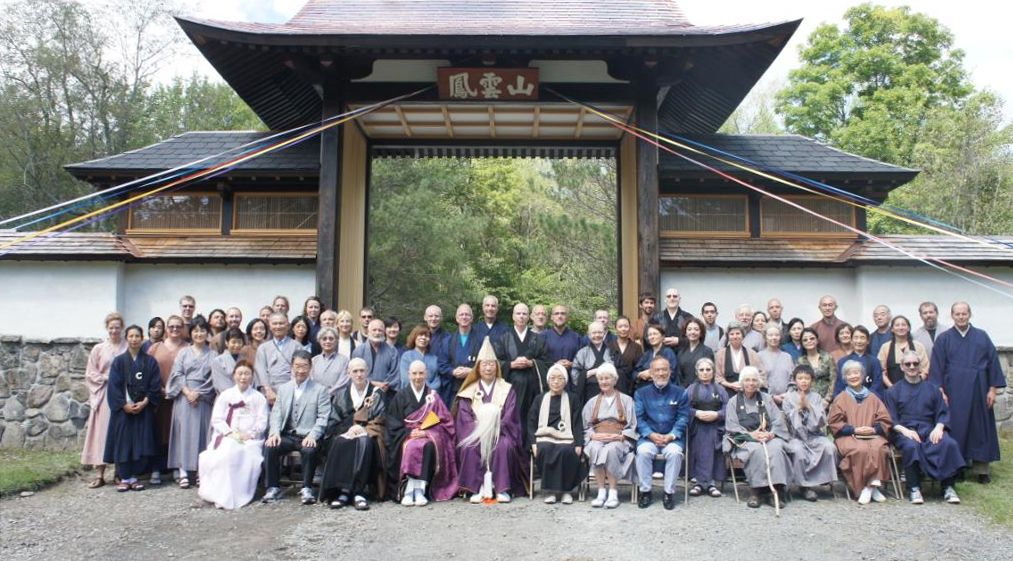
DBZ O-Bon Ceremony 8/11/12
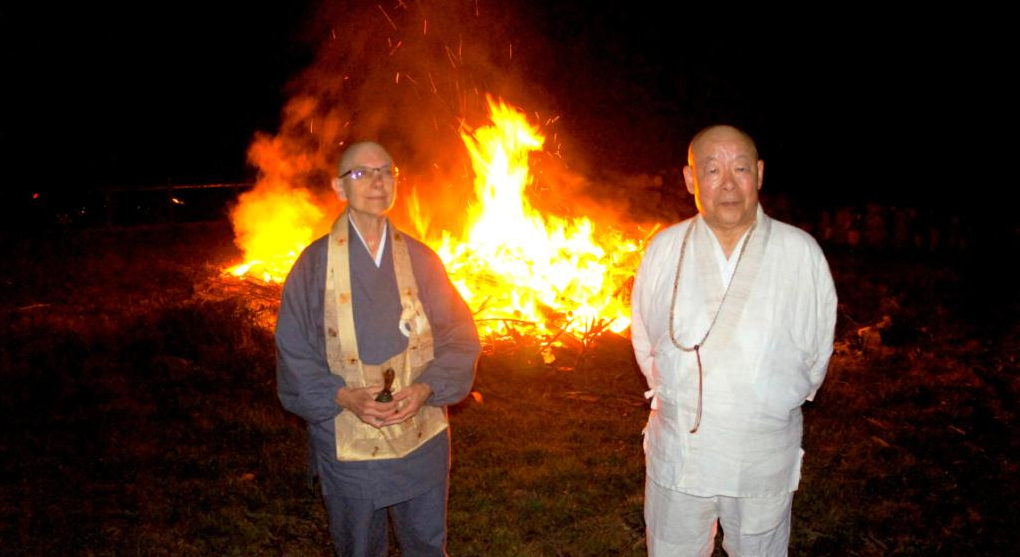
Click on above thumbnail for high-res image.
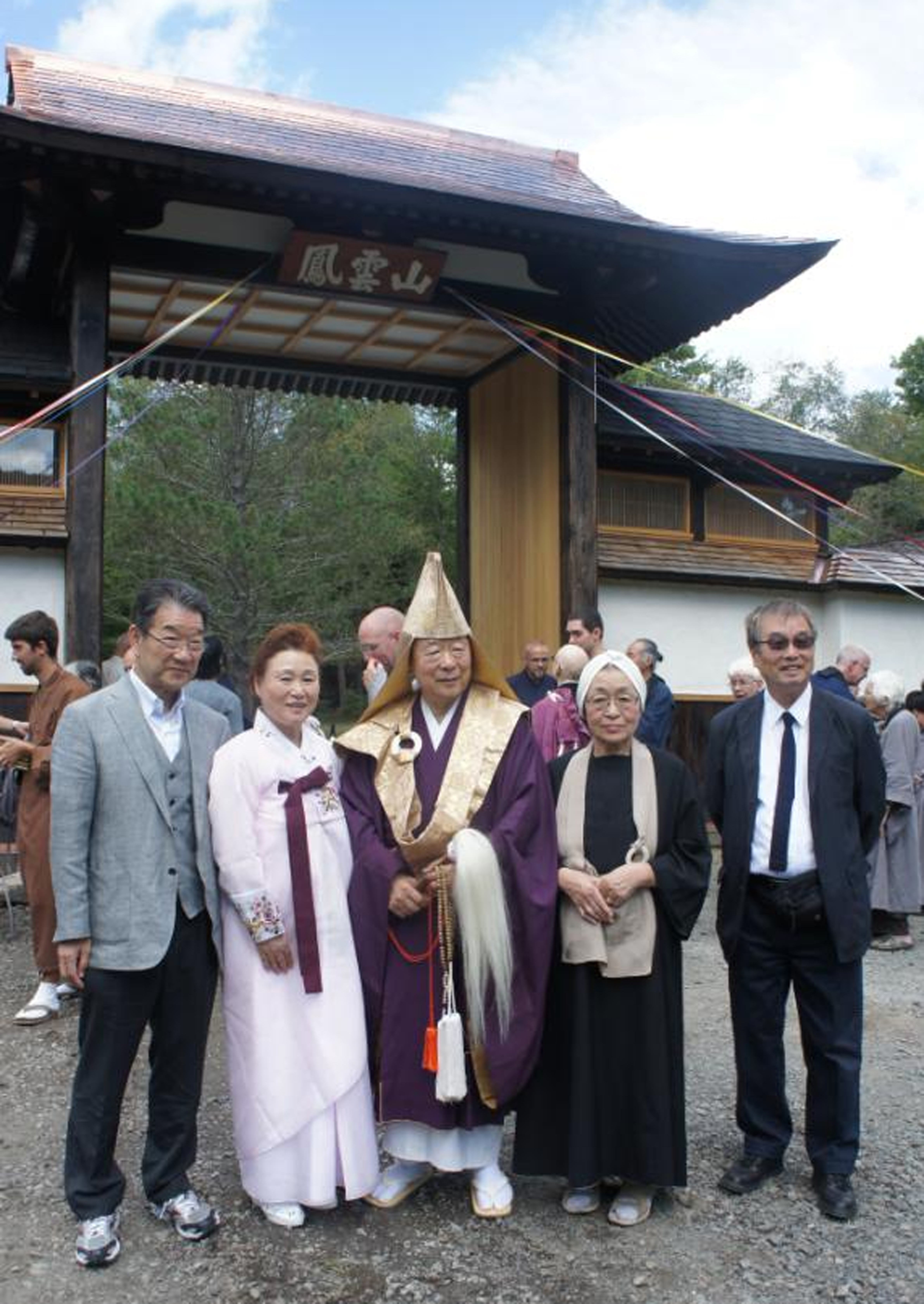
DBZ Sanmon Ceremony 8/12/12
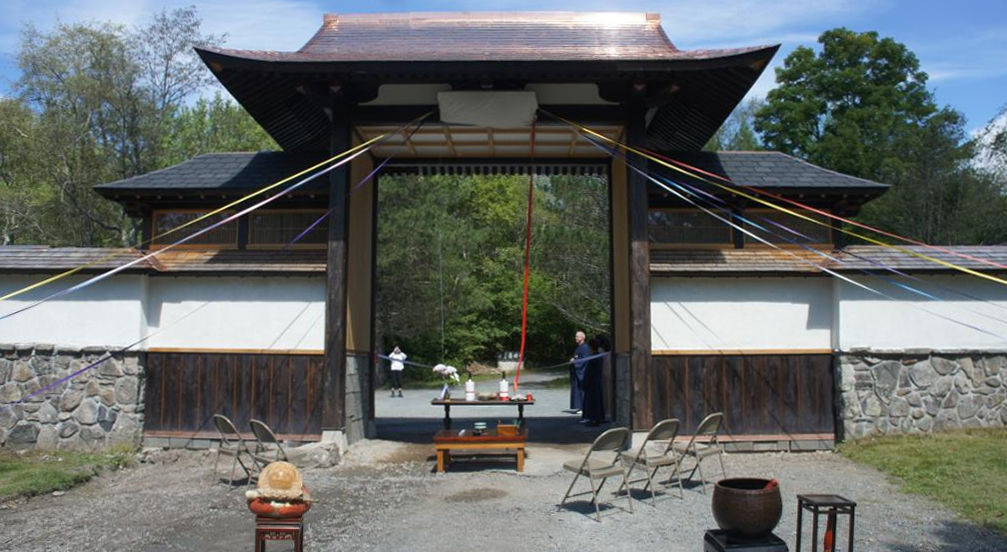
Click on above thumbnail for high-res image.
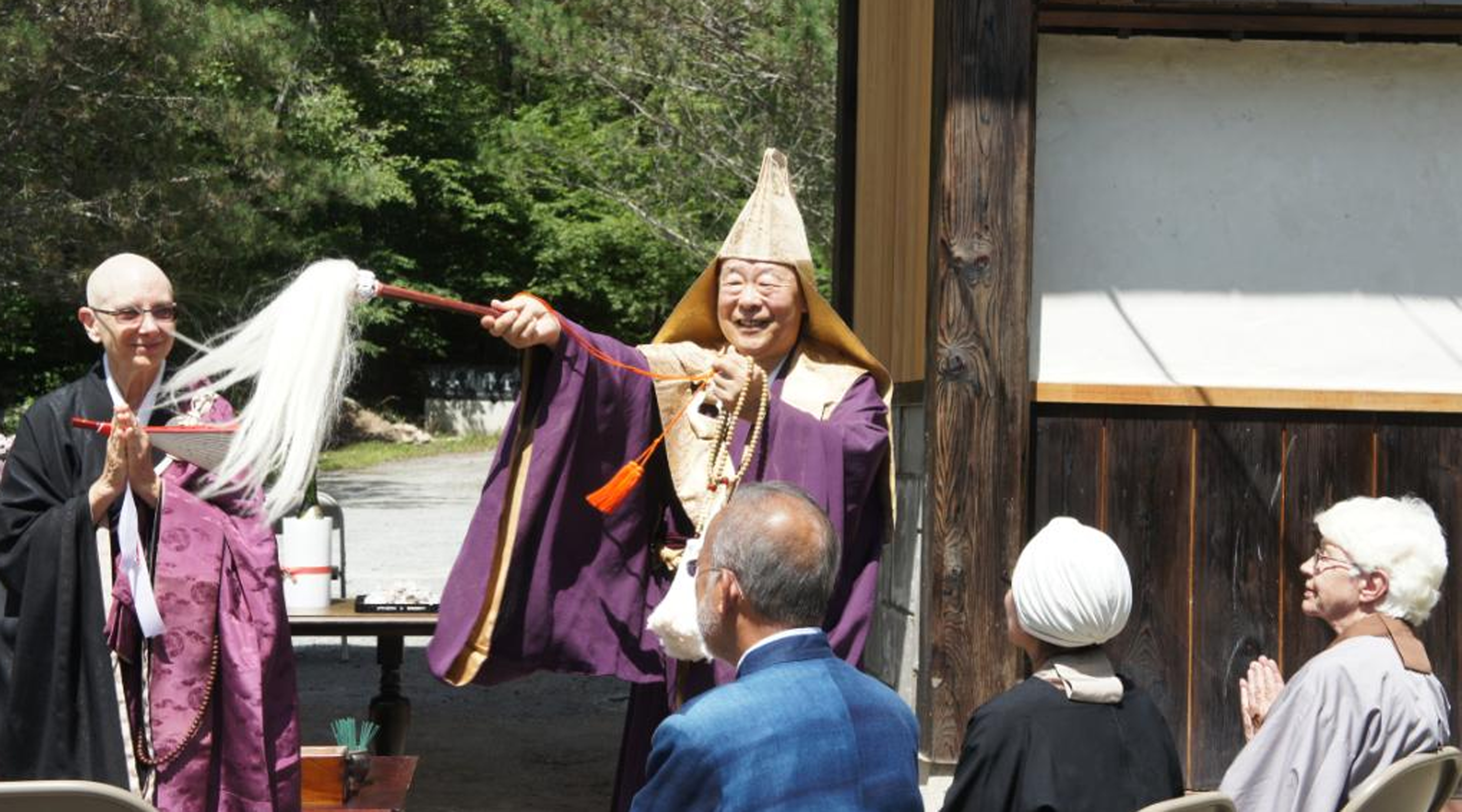
Click on above thumbnail for high-res image.
Click on above thumbnail for high-res image.
Click on above thumbnail for high-res image.
Click on above thumbnail for high-res image.
Dai Bosatsu Zendo O-Bon and
Sanmon Gate Ceremonies
August 11–12, 2012
Photographs by Zensho Martin Hara.
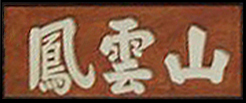
The sign above the gate entry way reads:
鳳雲山
~ Hounsan ~
“Male phoenix bird cloud mountain.”
Pursuant to an appeal for pictures of the DBZ Sanmon gate on the now expunged Zen Forum International (ZFI) "Teacher Sexual misconduct - Eido Tai Shimano, ZSS, and others." thread (August 16, 2012; Page 107) (Please note that the original non-expunged ZFI thread is archived here:)
The shimanoarchive received an anonymous email on 08/18/12 pointing to the Playful Moon website:
http://www.playfulmoon.com/EidoRoshi/where.html
containing the following:
"Eido Roshi at Kongo-ji for Obon and Gate inauguration, August 2012"
"After talks of cancellation, ‘Over 100 Sangha members attended the OBON Ceremonies on Saturday, August 11th, 2012 [...], over 60 guests remained for the Sanmon Gate Ceremonies. Eido Roshi conducted the inauguration announcing a new Dharma name for DBZ: Hounzan Dai Bosatsu Zendo Kongo-ji.’ (extracted from an email to Sangha Members from Zensho Martin Hara). Here are links to photos:"
"OBON at DBZ: photobucket.com/obon2012 Last accessed August 16, 2012"
"Sanmon Gate Ceremony: photobucket.com/hounzan Last accessed August 16, 2012"
|
[ See entry of 05/10/12 ]
Question: Under very restricted conditions: only by permission, with direction, and supervision, during a time of no official gatherings or programs, for approved reasons, and very briefly. [ See entry of 02/14/11 ] |
In the interest of historical accuracy, transparency, full disclosure, and in accord with the “Fair Use” clause of International Copyright Law; a representative sample of the above referenced photographs is included here.
ADDED:
08/17/12
APPENDED:
08/19/12
08/17/12
(Full Version)
20120817_ZFI_thread.pdf
(Continuation)
20120819_ZFI_thread.pdf
(Sanitized Version)
http://www.zenforuminternational.org/viewtopic.php?f=73&t=3584&start=2150
Teacher Sexual misconduct -Eido Tai Shimano, ZSS, and others.
August 15 – 19, 2012 Page 107
“Moderator's Note:”
“I have just removed several more posts. Everything that can be known about Eido Shimano and ZSS, and the past and current state(s) of affairs has been fully set out here by participants with differing points of view. Nothing new is being added, merely points scoring and/or personal bickering over whose allegations and views are more or less ‘true.’ "
“The spectacle we're witnessing on this board now is adding nothing to the body of knowledge or understanding, and is more posturing and insults.”
“I am locking this topic. The moderators will review whether or not it will be reopened. Nonin will be asked to recuse himself form the moderators' discussion, as he has been an active participant in the exchanges here. If you want to communicate your views about whether the topic should remain locked or be reopened you may do so by PM either to myself or to ‘Global Moderators’ -- but NOT on the open forum.”
“~Carol”
ADDED:
08/15/12
08/15/12
20120815_Marinello_ZFI.pdf
Genjo Marinello, Osho - Shimano's Fifth Dharma Heir.
Post to Zen Forum International.
“As we know, just recently on August 12, 2012, Eido Roshi was scheduled to conduct a special ceremony with honored guests from Japan, to inaugurate the new $100,000+ Samon (Main Temple) Gate to Dai Bosatsu Zendo (DBZ), the Zen Studies Society (ZSS) monastery in the Catskill Mountains of New York."
[ See entry of: 06/10/2010 ]
" The current abbot of ZSS invited him, Shinge Sherry Chayat Roshi, appointed by Eido Roshi to be his successor. Many former ZSS students, including myself, and some current participants, including some ZSS Board members did not consider this invitation a good idea. In fact it is my recollection that nearly the entire ZSS board, at least when I sat on it, did not intend to invite Eido Roshi to this or any other ceremony on ZSS property, let alone allow him to ‘conduct’ one (see: http://playfulmoon.com/EidoRoshi/segaki ... 2Email.pdf ).”
“Personally, I’ve come to forgive Eido Roshi for turning out to be a sexual predator who preyed on the most vulnerable female students under his care, resorting to date rape when he couldn’t get his way, and passing STDs to his students. Perhaps this forgiveness is not mine to give, as I was in no way abused or assaulted by him, but somehow I’ve come to understand that he clearly had no capacity to control his impulses, even though he was confronted about his problem multiple times over the course of decades. I have no desire to see him in prison, even though in many states he would be in prison for having sexual relations with multiple females (often at the same time) in the ‘congregation.’ ”
“You see, though he has my forgiveness and understanding, I do not want more innocent students exposed to his abuses of power and authority.”
“What I'm not yet able to forgive is that Shinge Roshi and the ZSS board continue to expose the ZSS Sangha to this man that still denies he has a problem, at least not any kind of problem that would require him to work on his culpability. What I also cannot forgive or understand is why they are bankrupting the organization trying to pay him his deferred compensation at the rate of $90,000+ per year in compensation and benefits, even though he continues to teach in New York and elsewhere around the world. (See: http://playfulmoon.com/EidoRoshi/where.html ). Unfortunately, Shinge Roshi has told me he deserves this amount, which is why I think she is unwilling to test the issue in court. Yet, by holding to this position, she and the board are indirectly funding Eido Roshi’s ability to continue to teach, exposing more students to his predations. As many know, ZSS is currently seeking to set up a conservation trust with the Nature Conservancy for about half of the DBZ property, an idea which I support, to fund the Shimanos retirement, which I don’t support or forgive (see: http://www.choboji.org/NC.pdf), as it will continue to fund Eido Roshi’s teaching and predations off property.”
“Many have said to me, ‘Shinge Roshi is doing the best she can,’ but sometimes we must come to recognize ‘the best we can’ just doesn't cut it, and if we are clear eyed enough to see this we must say so. In my opinion, Shinge Roshi’s loyalty to Eido Roshi is clouding her better judgment and hurting ZSS's chances of recovery. By supporting only the sangha left standing after another mass exodus, so many are ignored and left out of the process. At least this is how I see it.”
ADDED:
08/09/12
08/09/12
20120809_Spike_ZFI.pdf
Post by "Spike" on August 9, 2012.
“So many of you have written beautiful cards and emails and have phoned regarding my health. Please know that I am grateful for your concern and your chanting, and it has helped a lot. I have taken every imaginable test, and the results are very encouraging: no sign of stroke, my heart is functioning fine now, and the congestion in my lungs has cleared. After a few days' rest, I was able to lead the three-day summer sesshin at Hoen-ji, and I am now looking forward to O-Bon, which is such a deeply meaningful ceremony for all of us.”
“As I know you all know, sitting and sharing the Dharma is incomparably the best way to heal. At the same time, I am learning to listen to my body, and to yield when rest is needed. This Mind is unlimited, but our bodies are not. I will do my best to model this for all of us.”
“We are really fortunate in having a great group of residents at Dai Bosatsu Zendo, three of whom will begin 1,000-days training as monks at the end of Golden Wind Sesshin. All who did spring kessei are returning, and several new kessei students will be joining us in September, bringing our total to about fifteen.”
ADDED:
08/02/12
07/27/12
20120727_Marinello_NC.pdf
A Letter From Genjo Marinello-osho to Rick Werwaiss and Mark Tercek of The Nature Conservency.
"I wish to add my voice to the plea that you NOT proceed with the land trust deal that is in the works with the Zen Studies Society (ZSS) at this time. I have no argument with protecting the land concerned, but I do object the fact that the resources generated from this trust will mainly go to a known sexual predator, the founding abbot of ZSS, Eido Shimano Roshi, who serially groomed vulnerable female students under his care and direction for his sexual gratification over the course of decades, even reportedly engaging in date rape if he didn't have his way.”
“The land is not going anywhere and the deal should be at least postponed until after the ZSS has concluded all financial obligations and organizational connections with the Shimanos (they still invite him to events and ceremonies). At the moment, as the Buddhist Channel article correctly states, the Shimanos are being paid in excess of $90,000 a year in deferred compensation and benefits, which is bankrupting the organization, making it clear that if the trust would go forward at this time the monies would end up going to him. Please let the ZSS become disentangled financially before proceeding. I believe not going forward with the trust at this time will force the ZSS to go to court to abrogate what are legally flawed, unjustifiable Deferred Compensation Agreements with the Shimanos. Please don't help ZSS give this precious resource away. If anything the monies should be used to support the victims not the victimizer.”
ADDED:
07/28/12
07/09/12
20120709_Froberg.pdf

Marnie Froberg
Smiling Buddha Cabaret Blog
"Zen Has no Morals"
"An academic paper by Christopher Hamacher presented on 7 July 2012 at the International Cultic Studies Association's annual conference in Montreal, Canada has been uploaded to The Zen Site. It covers the cases of Eido T. Shimano in the USA, and Dr. Klaus Zernickow (also known as Sotetsu Yuzen) in Germany. 'Zen Has No Morals!'- The Latent Potential for Corruption and Abuse in. Zen Buddhism, as Exemplified by Two Recent Cases by Christopher Hamacher [PDF from The Zen Site]"
"It's lengthy at 44 pages but well worth a read, footnotes included, as they provide further insight and documented references into the abuse and misuse of the Buddhadharma in the Zen context."
"One of the most pertinent elements of the paper is the eight types of behavior the author describes as being characteristic of both these cases and possibly other cases as well. These behaviors include:
• a) Aggression upon being confronted
• b) Extreme formalism
• c) Blaming the student's ego
• d) Hypocrisy
• e) Groupthink
• f) Information control
• g) Self-aggrandizement or 'cult of personality'
• h) Autocratic institutional control"
[ See entry of 07/07/12 ]
ADDED:
07/28/12
07/26/12
Telephone Message to Kobutsu Malone from Rick Werwaiss: Received July 26, 2012 – 1:29 PM
Return Telephone Call to Rick Werwaiss – (518) 242-6312
July 26, 2012 – 1:41PM 2:19 Duration
"R: Good afternoon. [sternly] If you are recording this conversation I am requesting that you stop doing so please.
K: That’s my policy to record everything for my own protection. But I will in this case… all right, hold on..."
[pause while recording is stopped – live, handwritten notes taken from this point ]
"K: Ok, we are on.
R: Thank you for turning off the recording. I am calling to request that you take down the Nature Conservancy logo, the pictures of myself and Mark Tercek from the website and to remove the transcript of our last conversation from your website.
K: Ok, I’ll have to get back to you on that.
R: Ok, thank you.
K: Yep, bye."
ADDED:
07/25/12
07/25/12
20120725_Spike_ZFI.pdf
Post by "Spike" on July 25, 2012.
"We at The Zen Studies Society hope you are all enjoying the summer. We want to let you know that Shinge Roshi was taken to the emergency room on Saturday morning after losing consciousness. A battery of tests ruled out cardiac arrest and stroke, but did reveal mild emphysema and degenerative disc disease."
"We have reviewed the summer schedule at Dai Bosatsu Zendo Kongo-Ji with an eye to moderating her commitments, and to consider projected attendance and event preparation. As a result, we are cancelling Samu Sesshin (August 3-8). We will continue to host 0-bon (August 11-12), but with a more reserved format. Aside from these changes, we will continue to offer the events published on our Calendar for August and September. We apologize for any inconvenience this change may cause."
ADDED:
07/25/12
07/23/12
20120723_Hara_Sangha.pdf
Email From Zensho Martin Hara to Dharma Brothers and Sisters.
"Attached is a photo of the shrine that Roshi had set up for Segaki. Thank you all for making this day complete."
"On another matter, Eido Roshi will be attending DBZ for OBON on August 11th-12th. He will also conduct a special ceremony on Sunday with honored guests from Japan, to inaugurate the new Samon Gate for DBZ. This will be an auspicious weekend and an opportunity for all Sangha members to share and honor our Dharma lineage for all times."
"HOWEVER, I have just been informed of some talk about CANCELLING OBON due to a lack of Sangha response or support. Cancelling OBON to our Rinzai tradition would be like the Christian Church canceling Easter due to inconveniences. I believe that THIS is not possible as long as there are Sangha members alive who understand the importance of Segaki and OBON as part of our dharma practice and tradition. This is one time where showing up will make a difference."
"Please, if you have any intention of attending OBON August 11th -12th, 2012 at DBZ, please register now!"
ADDED:
07/25/12
07/22/12
20120722_Hara_Sangha.pdf
Announcement:
Segaki Zazen-Kai All Day Ceremony
Sunday July 22, 2012
Kips Bay, NY
"You are cordially invited to attend a very special Rinzai Zen Tradition:"
"Segaki Zazen-Kai All Day Ceremony
Sunday July 22, 2012
Kips Bay"
"Ven. Eido Shimano Roshi, Founding Abbot (ret.) of Dai Bosatsu Zendo and Shobo-Ji and Aiho-san have accepted our invitation to attend this Segaki Zazen-kai as guest hosts and look forward to seeing you there."